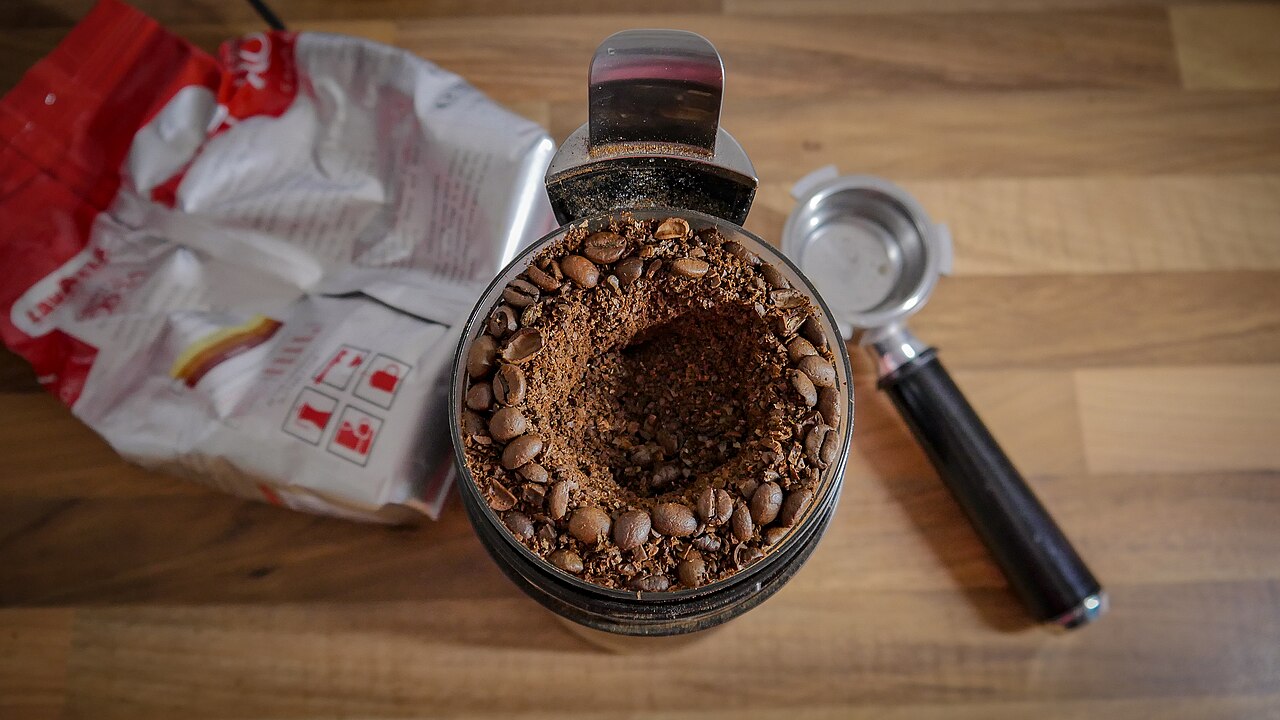
You are standing in front of two bags of coffee. One contains whole beans, while the other is already ground and ready to use.
The whole-bean option sounds better if you want fresh coffee, but it also means buying a grinder, finding space for it, and adding another step to your morning routine.
Is freshly ground coffee really worth the effort?
For many people, yes. But pre-ground coffee is not automatically a bad choice. The better option depends on how quickly you use it, how you brew, and how much convenience matters in your daily routine.
What Happens When Coffee Beans Are Ground?
A whole coffee bean protects much of its internal structure from direct contact with air.
Once you grind it, the exposed surface area increases significantly. Aromatic compounds can escape more easily, and the grounds become more vulnerable to oxygen, moisture, heat, and surrounding odors.
That is why freshly ground coffee often smells more expressive than coffee that has been sitting in an opened bag for several days.
The difference is especially noticeable when you open a bag of beans, grind a dose, and brew it immediately.
Pre-ground coffee has already gone through this process before it reaches your kitchen. How much flavor it has lost depends on when it was ground, how it was packaged, and how it has been stored.
Does Freshly Ground Coffee Always Taste Better?
Not in every situation.
Fresh grinding gives you better control over the timing and size of the grounds, but it does not guarantee a good cup.
A poor grinder can produce an uneven mixture of large particles and very fine dust. The resulting coffee may taste less balanced than a well-produced pre-ground coffee that matches your brewing method.
The beans themselves also matter. Freshly grinding stale or low-quality coffee does not make it fresh again.
What freshly grinding mainly offers is an opportunity to preserve more of the aroma and choose the grind size immediately before brewing.
When Whole Beans Make More Sense
Whole beans are a good choice if you enjoy exploring different coffees or want more control over the final result.
You want to try different brewing methods
A pour-over, French press, and espresso machine do not use the same grind size.
With whole beans, you can adjust the grind depending on what you are making. You can also experiment with small changes without needing to buy several different bags of ground coffee.
You do not finish a bag quickly
If a bag stays open for several weeks, grinding only what you need can help preserve the remaining beans.
Instead of exposing the entire bag to air in ground form, you keep the beans whole until each brew.
Our guide to storing coffee beans without losing flavor explains what to do after opening a bag and how to reduce exposure to air, heat, light, and moisture.
You enjoy adjusting your coffee
If you sometimes find a cup too sour, too bitter, or too weak, being able to adjust the grind is useful.
A slightly finer or coarser grind can change the extraction, although it should not be the only adjustment you consider.
When Pre-Ground Coffee Is the Better Choice
Pre-ground coffee can be a sensible option for everyday brewing.
You want a quick morning routine
Not everyone wants to weigh beans and operate a grinder before breakfast.
If you use a drip coffee maker every morning and enjoy the result, buying coffee ground for that machine can save time and reduce cleanup.
You do not want another appliance
A grinder takes up counter or cupboard space. It also needs cleaning, and some models can be noisy.
If you drink coffee occasionally, the extra equipment may not be worth it.
You buy smaller bags and finish them quickly
Pre-ground coffee is easier to manage if you buy modest quantities and use them regularly.
Choose a package with good sealing, close it carefully after opening, and avoid leaving it near heat or moisture.
The important thing is not to assume that every pre-ground bag is equally fresh. Check the roast or packaging information when available.
Which Grind Should You Buy?
If you choose pre-ground coffee, make sure it matches your brewing method.
| Brewing method | Typical grind |
|---|---|
| Espresso machine | Fine |
| Moka pot | Medium-fine |
| Pour-over | Medium to medium-fine |
| Automatic drip coffee maker | Medium |
| French press | Coarse |
These are starting points rather than fixed rules. Filter shapes, machines, and personal taste can require adjustments.
Buying espresso-ground coffee for a French press, for example, can leave you with excessive sediment and a difficult plunge.
Is a Coffee Grinder Worth Buying?
If you drink coffee every day and enjoy changing beans or brewing methods, a grinder can be a worthwhile purchase.
You do not need an expensive model to begin. A reasonably consistent burr grinder is usually a more useful starting point than buying a complicated machine with features you will never use.
If you are happy with your current pre-ground coffee, there is no need to replace your routine just because freshly ground coffee is often recommended.
The Practical Choice
Choose whole beans if you want more control, enjoy experimenting, and are willing to grind before each brew.
Choose pre-ground coffee if convenience matters more, you use it regularly, and you can buy a grind that suits your brewer.
The best coffee is not necessarily the one that requires the most equipment. It is the one you can prepare consistently and actually enjoy drinking.


