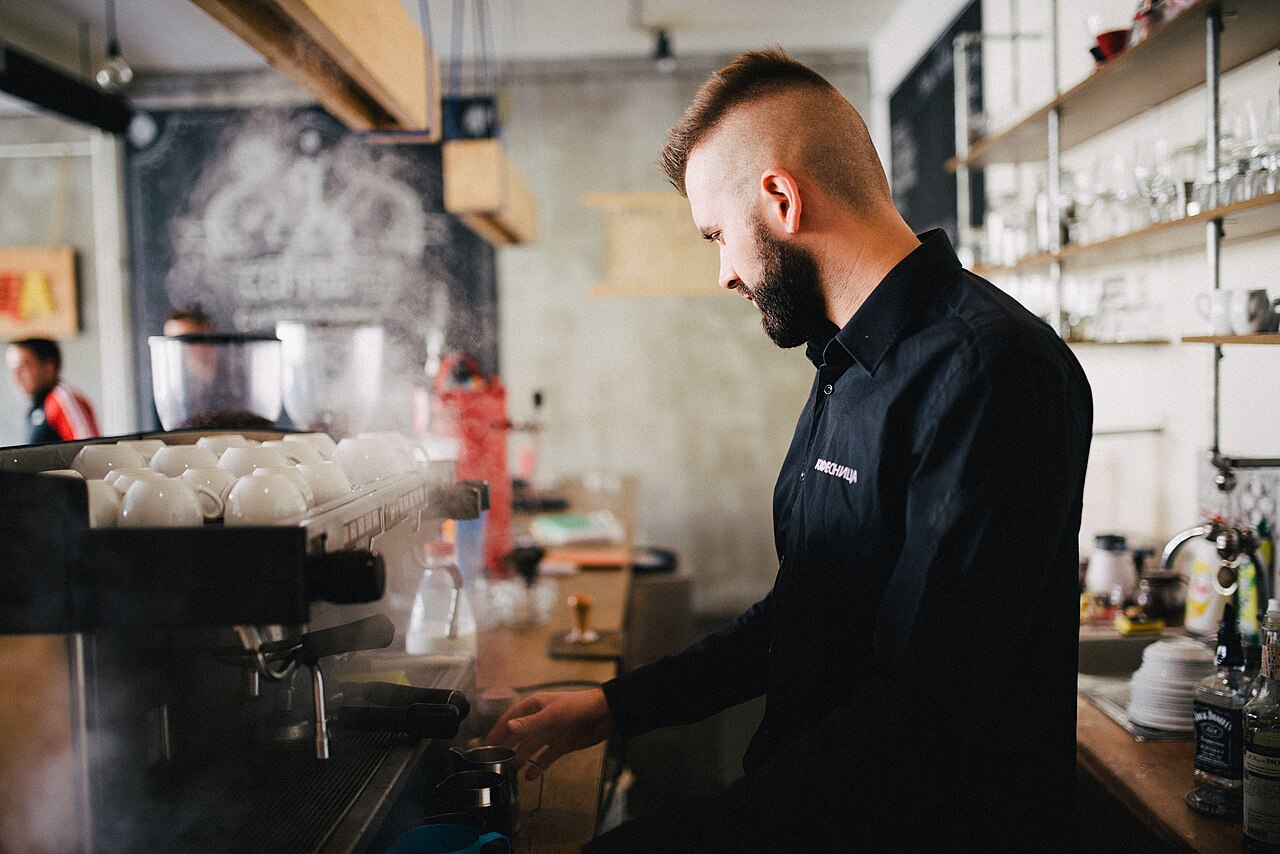
You buy a bag of coffee from a roaster, bring it home, and make a cup using the method you normally use. The result is decent, but it doesn't taste like the coffee you enjoyed at the café.
You might even use the same beans. So why does the coffee shop version seem smoother, sweeter, or more balanced?
It is tempting to assume that cafés have better equipment or that you need an expensive espresso machine. Sometimes equipment does make a difference, but it is rarely the only reason.
A coffee shop usually has a more controlled routine. At home, several small variables can change from one cup to the next without you noticing.
The Same Coffee Beans Do Not Guarantee the Same Cup
Coffee beans are only one part of the final drink.
After roasting, the coffee still needs to be ground, measured, brewed, and served. Each step affects how much flavor ends up in the cup.
A café may use a fixed recipe throughout the day, while a home brewer might estimate the amount of coffee, pour water by eye, or use a grinder with inconsistent settings.
Those differences can add up.
If you want to compare your home coffee with a café drink, start by making the preparation more consistent rather than immediately buying new beans.
The Grind May Be Different
Grinding is one of the biggest differences between a carefully prepared café drink and an ordinary home cup.
A café grinder is usually designed for frequent use and consistent adjustment. Depending on the equipment, it may produce a more predictable particle distribution than an inexpensive home grinder.
This matters because coffee particles do not all extract at exactly the same speed.
If your grinder produces too many very fine particles, the cup can become muddy or overly bitter. If the grind is too coarse, water may pass through too quickly and leave the coffee tasting thin.
A useful first step is to compare your grind with the requirements of your brewing method.
You do not need to copy a café's grinder settings. Different grinders use different scales, so a number on one machine does not necessarily mean the same thing on another.
Your Coffee-to-Water Ratio May Be Inconsistent
At home, it is easy to use a scoop one morning and a different scoop the next.
The problem is that coffee beans vary in size and density. A spoonful of one coffee may not weigh the same as a spoonful of another.
Cafés generally work with measured doses and repeatable recipes.
Try weighing your coffee and water instead of relying on scoops. For a simple pour-over starting point, you could use 15 grams of coffee with 240 grams of water, then adjust according to taste.
If you are making coffee with milk, the concentration matters even more. A regular-strength filter coffee can disappear behind the milk, while a stronger coffee base gives the drink a more noticeable coffee flavor.
Our guide to making coffee with milk without an espresso machine covers practical ways to prepare a stronger base at home.
Water Can Change the Flavor
This is an easy variable to overlook.
A café may use filtered water or a water system adjusted for its equipment. At home, you may use whatever comes directly from the kitchen tap.
Water composition can influence both extraction and the taste of the finished drink. Chlorine odor, mineral content, and bicarbonate levels can all make a difference.
If your coffee has an unpleasant smell or consistently tastes flat, try comparing your usual water with another safe drinking-water source.
You do not automatically need bottled specialty water. The first step is to understand what is in your local supply.
We already have a separate guide explaining why tap water changes the taste of coffee, including the roles of chlorine and minerals.
Café Equipment Is Used Differently
A professional espresso machine is not simply a more expensive version of a home coffee maker.
Cafés use equipment that is designed for repeated preparation. The grinder, brewing temperature, pressure, and milk-steaming process are all part of a coordinated routine.
But even a good machine can produce disappointing coffee if it is poorly maintained.
Old coffee residue, dirty grinders, mineral buildup, and neglected equipment can affect flavor.
At home, pay attention to the parts that come into contact with coffee. Wash your brewing equipment regularly, remove old grounds, and follow the manufacturer's instructions for cleaning and descaling.
You might discover that your coffee improves without changing beans or buying anything new.
Milk and Serving Temperature Matter Too
If the café drink you are comparing is a latte or cappuccino, you are not comparing coffee alone.
Milk changes sweetness, texture, and the way bitterness is perceived. Properly textured milk can create a smoother drink, while overheated milk may taste less pleasant.
The amount of milk also matters. A café might use a double espresso in a relatively small drink, while a homemade version contains much more milk and a weaker coffee base.
Ice can create another difference. A hot coffee poured directly over small ice cubes may become diluted before you finish drinking it.
A Simple Way to Compare Your Home Coffee
Instead of changing five things at once, try a small comparison.
- Use the same bag of beans for both attempts.
- Weigh the coffee and water.
- Use fresh grounds rather than coffee that has been sitting in the grinder.
- Keep the brewing method and serving size consistent.
- Clean your equipment before brewing.
- Taste the coffee at a similar temperature.
If the result improves, keep the changes that helped.
If it still tastes different, look at the particular drink you are trying to reproduce. An espresso-based café drink and a home pour-over are not expected to taste identical, even when they use the same beans.
Do You Need Better Equipment?
Not necessarily.
A more expensive grinder or coffee machine can give you more control, but it will not automatically make every cup better.
Start with the variables you can control: dose, grind, water, equipment cleanliness, and preparation consistency.
Once those are reasonably stable, you will have a much better idea of whether your current equipment is limiting the result.
The goal is not to turn your kitchen into a coffee shop. It is to understand why the café cup tastes different and find the changes that actually matter to your everyday routine.